Jump to:
Sheds for rental tenants? Yes, it’s doable, but you might need your landlord’s permission to build one, depending on your setup. Read on to see where your situation fits and which shed options you can take with you when you move.
Best Shed Options for Rental Tenants
Temporary sheds make the most sense for renters. They sit on the surface, and come apart in sections like modular sheds. That could be a small wooden shed in panels, a metal shed you can screw up on site, or a plastic shed that slots together.
More permanent sheds are potentially problematic as they’re more difficult to take away when you leave. It may be preferable for the landlord to provide their own shed to remain on the property. To give you an idea, check out our guide on how to move a shed.
Here’s a closer look at our best sheds for each material:
BillyOh Mini Keeper Overlap Pent Store Shed
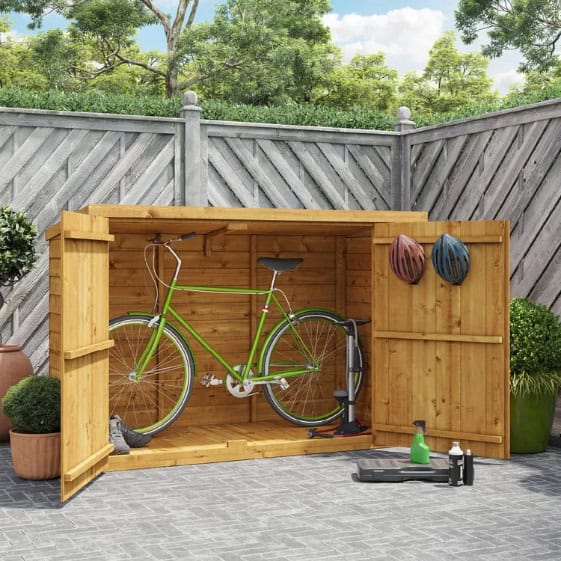
This is a great option for small-scale outdoor storage. The Mini Keeper is a low-profile, horizontal storage unit with a wide, shallow design at just 6×3 feet. It’s designed for items that don’t need much height, such as bicycles. Two bikes can fit inside and be accessed through the wide double doors. The door panels can also be fitted with hooks to hang helmets and other accessories.
It’s compact and not too heavy to sit on a patio or base kit.
BillyOh York Pent White Plastic Shed
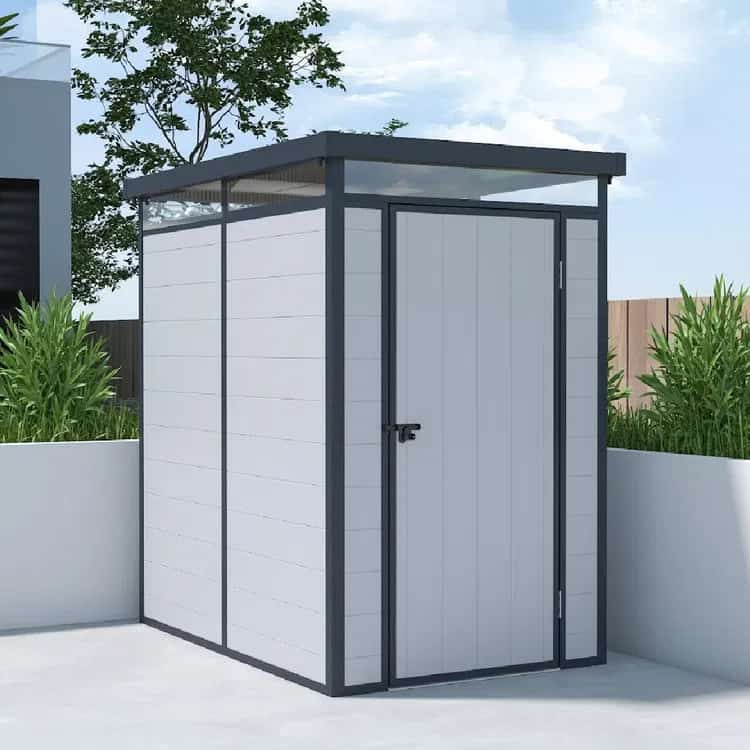
The York is compact in the sizes of 4×4 and 4×6, featuring a modern design and an edge skylight under the low pent roof. The plastic panels are sturdy but easy to move once dismantled. Cleaning is quick and easy, and the materials don’t warp or need painting.
BillyOh Centro II Pent Aluminium Metal Shed
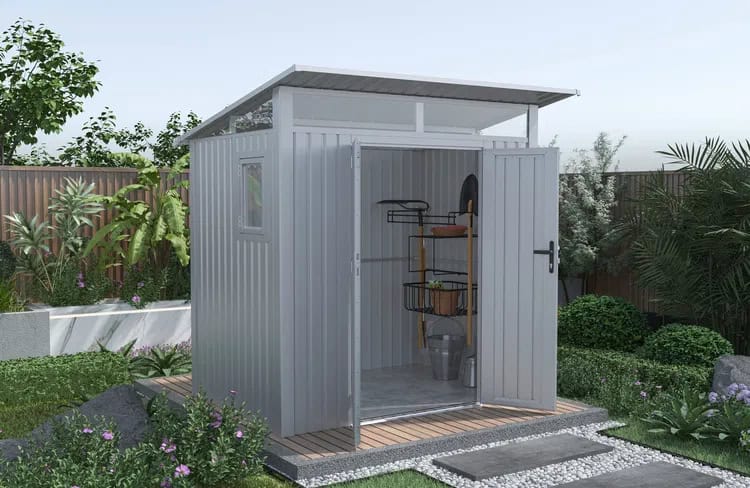
This metal shed is slightly bigger than the compact units above, but still fits in small gardens. It’s made from hot-dipped galvanised steel, so you don’t have to worry about rot, rust, or regular upkeep.
The windowless design keeps the contents hidden from view, which can help deter theft. Inside, the 7×6 layout gives you enough space to line up garden tools along the walls. Or, keep a mower at the back and store bikes or bins with room to move around.
There’s a built-in ventilation within the top skylights – a feature that makes it ultra-modern. But that’s not all: the white-ash finish is a real head-turner and is sure to impress in any garden.
There’s no digging, concrete bases, or heavy fixings with these temporary sheds — just basic anchoring for safety. They suit anyone who wants straightforward garden storage, even on their own property. When it’s time to move out, just redo the panels and fixings, and the garden stays much as it was.
Browse our selections below for more options:
Do I Need My Landlord’s Permission to Build a Shed?
Yes, you do need your landlord’s permission, but this depends on three factors:
- Shed size
- Location
- Setup (temporary vs. permanent)
A small shed that sits on the patio, is effectively just a box, and doesn’t alter the garden is fine and doesn’t require permission. But you’ll certainly need it for a bigger shed, one with a fixed base, or anything that changes drainage or the fence.
As for the setup, the rule is simple: you can go permanent if you own the property. But, as a tenant, a temporary shed is your safest bet.
You should absolutely avoid getting a shed that requires planning permission, as that’s a headache for everyone involved. At that point, the landlord would be better off providing the shed for the property. The quick way to ensure it’s a ‘permitted development’ is as follows:
- Don’t put your shed in the front garden.
- Don’t get one that takes up more than half the outdoor space.
- Don’t get one taller than the height limits.
- Don’t try to have anyone live in it.
Find out the height limits and other details in our guide to shed planning permission.
Tip: Some tenancy agreements mention “outbuildings” (sheds included) but don’t explain much. In that case, show your landlord a picture of your shed or the product info. It tends to make getting approval a lot easier.
Where to Put a Shed Without Making It Permanent
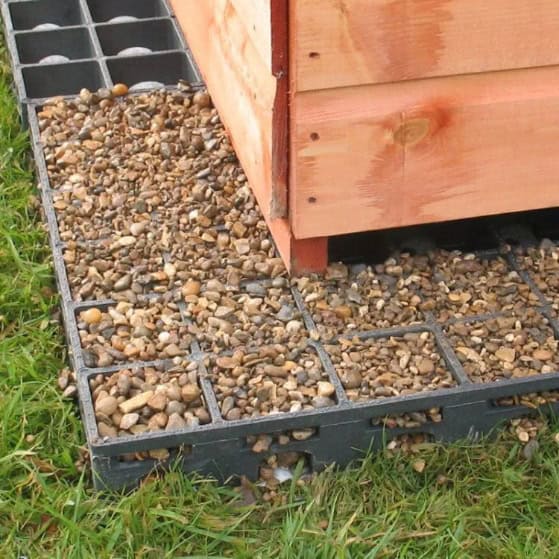
Surface-level options are the easiest and most flexible, such as:
- Existing patios or paving slabs
- Timber base kits that sit above the ground
- Plastic grid bases filled with gravel
These bases spread the weight evenly and leave almost nothing behind when you take the shed away.
Shop our available base kits:
Round-up
Just because you’re renting doesn’t mean you can’t have a shed. Small sheds that come in panels and are lightweight are perfect temporary solutions. Put it on a patio, a base kit, or a gravel grid, and it’s easy to manage and tidy to pack up. And always let your landlord know, even for a temporary shed, so there are no surprises.
Modular sheds are also a great option. Learn more about them next: What Is a Modular Shed